Module 6 · Materia Medica · Lesson 38
Part of: Beginner Materia Medica: Twelve Herbs, Honestly Rated
Echinacea: A Complete Materia Medica Entry
1 min read · 301 words
Pure Herbal Wisdom — Herbalism 101, Lesson 38
"Does echinacea work?" is actually two different questions with two different answers. Prevention and treatment aren't the same claim.
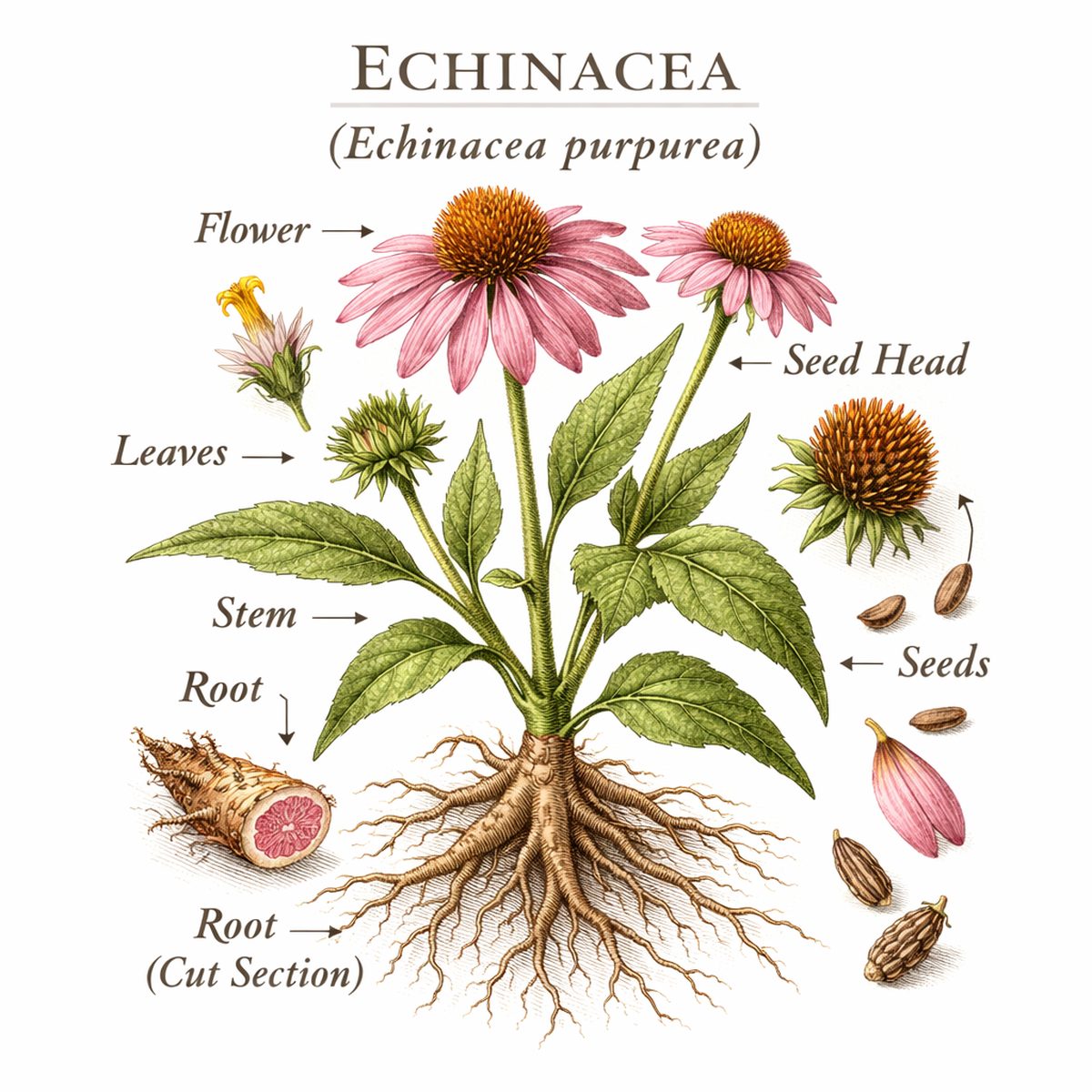
Botanical identity: several Echinacea species, most commonly E. purpurea. Plant part used: aerial parts and/or root, depending on preparation. Preparation: tinctures, capsules, teas, standardized extracts. Traditional use: immune and infection support, particularly among Indigenous peoples of North America historically.
Confidence Scale — prevention: Preliminary. A large Cochrane review covering 24 trials and over 4,600 participants found no statistically significant effect across prevention comparisons. Confidence Scale — treatment/duration: Moderate. Research on treating a cold already underway, particularly using aerial-part preparations, shows more consistent evidence for reduced duration and severity. Same herb, genuinely different evidence depending on exactly what you're asking it to do.
Echinacea's proposed immune mechanism involves stimulating T-cell activity — directly connecting to Lesson 22's immunomodulator framework and its core lesson that "boosting" immune activity isn't automatically desirable. For people with autoimmune disorders, or conditions like multiple sclerosis, this same mechanism is specifically why echinacea is generally advised against, or used only under direct medical supervision. One more specific detail: echinacea has been shown to increase blood caffeine levels by as much as 30% — worth knowing for regular coffee drinkers.
Dosage context varies enormously by preparation — roughly 2,400mg daily in conventional formulations, with much higher short-course doses in newer formulations, so product-specific guidance matters more here than a single number. Safety: autoimmune conditions are the standout caution; confirm which species and plant part a product actually uses.
Related Deep Dive: EP08, for the complete investigation.
Next: Black Seed.
This content is for educational purposes only and is not medical advice. Consult a qualified healthcare provider before using any herb, especially if pregnant, nursing, on medication, or managing a health condition.
Medical disclaimer: This content is for educational purposes only and is not medical advice. Consult a qualified healthcare provider before using any herb, especially if you are pregnant, nursing, giving herbs to a child, taking prescription medication, or managing a health condition.