Module 6 · Materia Medica · Lesson 37
Part of: Beginner Materia Medica: Twelve Herbs, Honestly Rated
Hawthorn: A Complete Materia Medica Entry
1 min read · 335 words
Pure Herbal Wisdom — Herbalism 101, Lesson 37
One well-designed study found hawthorn doesn't change digoxin's actual blood levels. Clinicians still recommend caution combining them. Not a contradiction — two different questions.
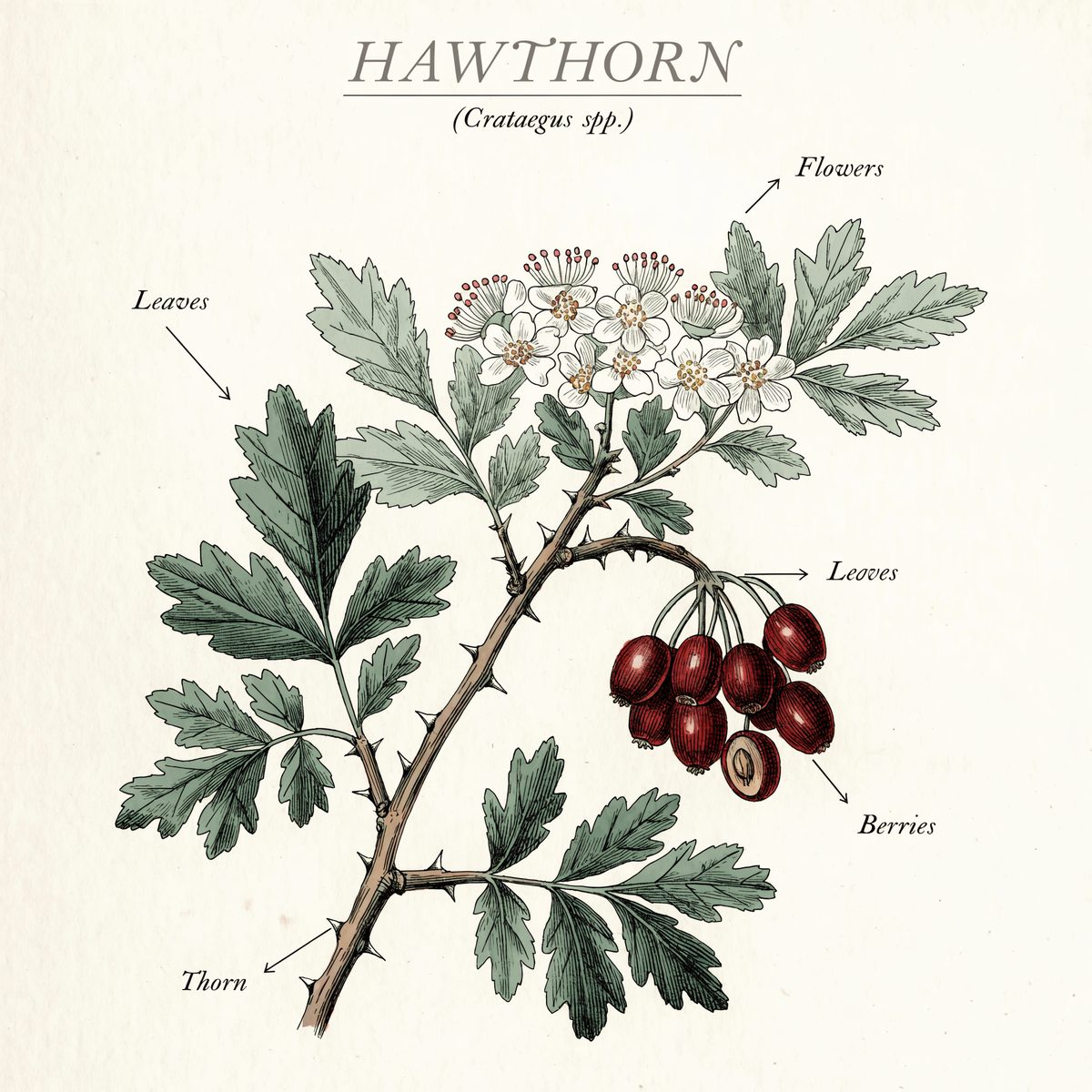
Botanical identity: Crataegus species — several related species used interchangeably in commerce and research. Plant part used: leaves, flowers, and berries all appear in preparations and research, unusually broad for a single herb. Preparation: standardized extract is how most of the strongest research was conducted. Traditional use: cardiac support across European herbal tradition.
Confidence Scale — exercise capacity in heart failure: Moderate. A meta-analysis of eight randomized trials in over 600 heart failure patients found hawthorn extract improved maximal exercise capacity by an average of 7 watts over placebo.
Safety profile: the 2008 SPICE trial followed 2,681 heart failure patients on 900mg daily for two full years, finding no excess of liver, kidney, or cardiovascular adverse events compared to placebo. A Cochrane review across 14 trials found hawthorn users reported adverse events at a lower rate than the placebo group — a genuinely well-studied safety profile for a cardiac-active herb.
The digoxin nuance: a controlled study combining hawthorn extract with digoxin for three weeks found no significant change in digoxin's blood levels — a pharmacokinetic question, which hawthorn passed. But hawthorn and digoxin both act on the heart through different mechanisms, and combining two things that each affect cardiac function is a pharmacodynamic question — a different one entirely. That's why hawthorn "may have additive effects" with digoxin, nitrates, and blood pressure medications, even without a blood-level interaction.
Dosage context: 900–1,800mg daily of standardized extract, with effects sometimes taking 4–8 weeks to appear. Safety: anyone on any heart medication needs this to be a clinician-supervised decision, not a self-directed one.
Related Deep Dive: EP07, for the complete investigation.
Next: Echinacea.
This content is for educational purposes only and is not medical advice. Consult a qualified healthcare provider before using any herb, especially if pregnant, nursing, on medication, or managing a health condition.
Medical disclaimer: This content is for educational purposes only and is not medical advice. Consult a qualified healthcare provider before using any herb, especially if you are pregnant, nursing, giving herbs to a child, taking prescription medication, or managing a health condition.