Module 6 · Materia Medica · Lesson 33
Part of: Beginner Materia Medica: Twelve Herbs, Honestly Rated
Turmeric: A Complete Materia Medica Entry
2 min read · 350 words
Pure Herbal Wisdom — Herbalism 101, Lesson 33
The exact thing many curcumin supplements advertise as an upgrade — dramatically better absorption, usually via black pepper extract — is the same thing showing up in a growing number of real liver injury case reports.
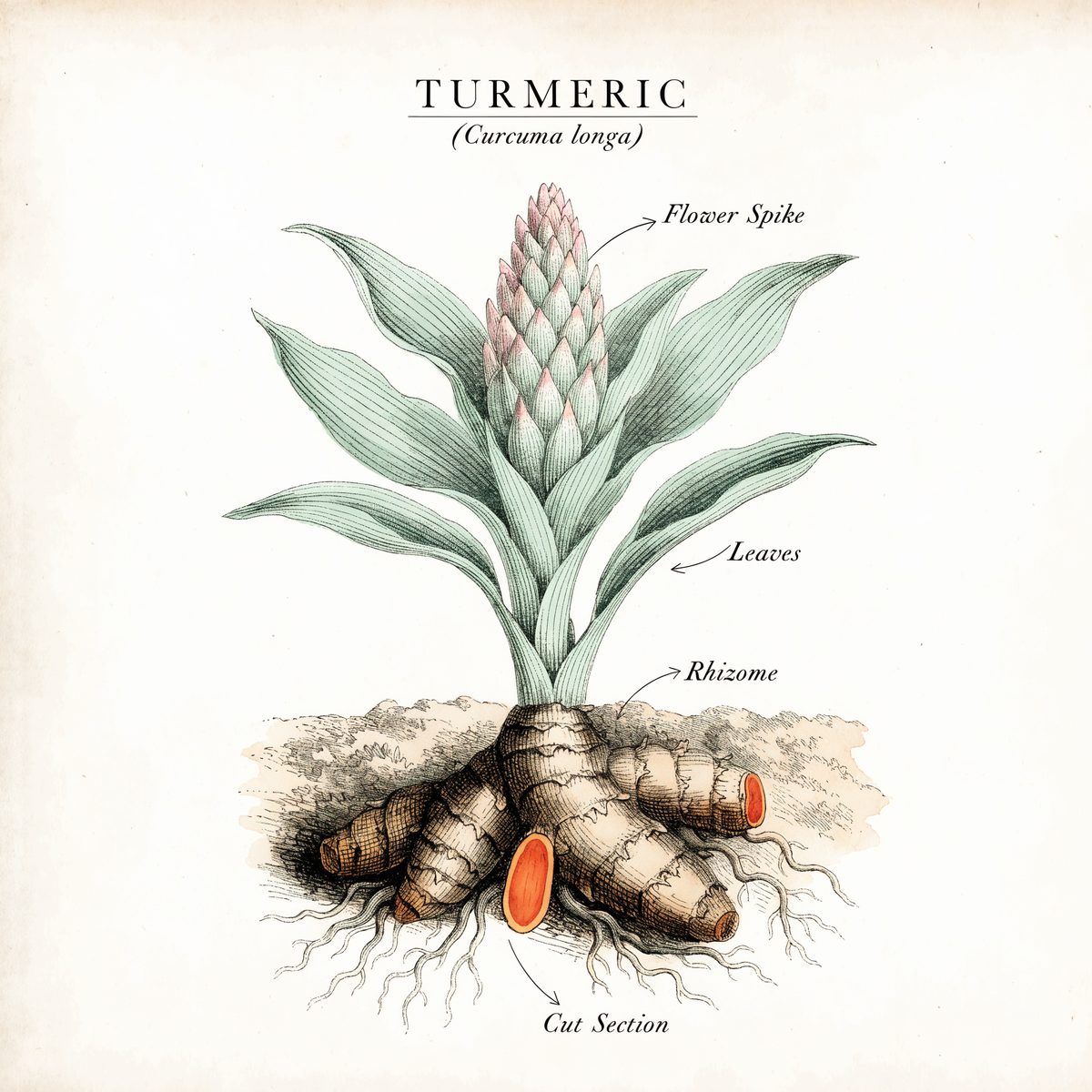
Botanical identity: Curcuma longa. Plant part used: rhizome. Turmeric's most-studied compound is curcumin — the pigment responsible for its color, and the compound behind the NF-κB inhibition mechanism from Lesson 22. Preparation: culinary spice, tea, capsules, standardized extract. Traditional use: long-standing use across South and Southeast Asian food and medicinal traditions.
Confidence Scale — osteoarthritis: Moderate. Multiple randomized trials, including one comparing a bioavailability-enhanced extract directly against a standard pain reliever, have shown meaningful pain reduction over 4–8 week follow-ups — genuinely encouraging, though short of the systematic-review synthesis that would justify "Strong."
The bioavailability-safety tradeoff: curcumin alone is poorly absorbed orally — part of why it's traditionally been considered safe even at high doses. Piperine, from black pepper, changes that: just 20mg can increase curcumin's bioavailability roughly 20-fold. More compound reaches your system, meaning potentially more benefit — and more exposure than curcumin's traditional safety profile was ever tested against. A growing number of case reports, including a ten-case series published through the Drug-Induced Liver Injury Network, have linked turmeric supplements — especially high-bioavailability and piperine-containing formulations — to real, documented liver injury. A recent, evolving signal, not a settled panic point, but exactly the kind of detail worth knowing.
Dosage context: 250–500mg/day of a bioavailability-enhanced extract has shown benefit in osteoarthritis trials; plain curcumin has been used at several grams daily in some safety studies, precisely because of low absorption. Safety: check specifically for piperine or other enhancers on any label — it's not a footnote, it changes the dose you're actually getting; anyone with liver conditions should be especially cautious.
Related Deep Dive: EP03, for the complete investigation.
Next: Garlic.
This content is for educational purposes only and is not medical advice. Consult a qualified healthcare provider before using any herb, especially if pregnant, nursing, on medication, or managing a health condition.
Medical disclaimer: This content is for educational purposes only and is not medical advice. Consult a qualified healthcare provider before using any herb, especially if you are pregnant, nursing, giving herbs to a child, taking prescription medication, or managing a health condition.