Module 6 · Materia Medica · Lesson 32
Part of: Beginner Materia Medica: Twelve Herbs, Honestly Rated
Ginger: A Complete Materia Medica Entry
1 min read · 282 words
Pure Herbal Wisdom — Herbalism 101, Lesson 32
Same herb, two claims, two completely different evidence pictures. Ginger's nausea research is genuinely solid. Its blood-thinning interaction research is real but unsettled — exactly why Lesson 30 taught you to rate the claim, not the herb.
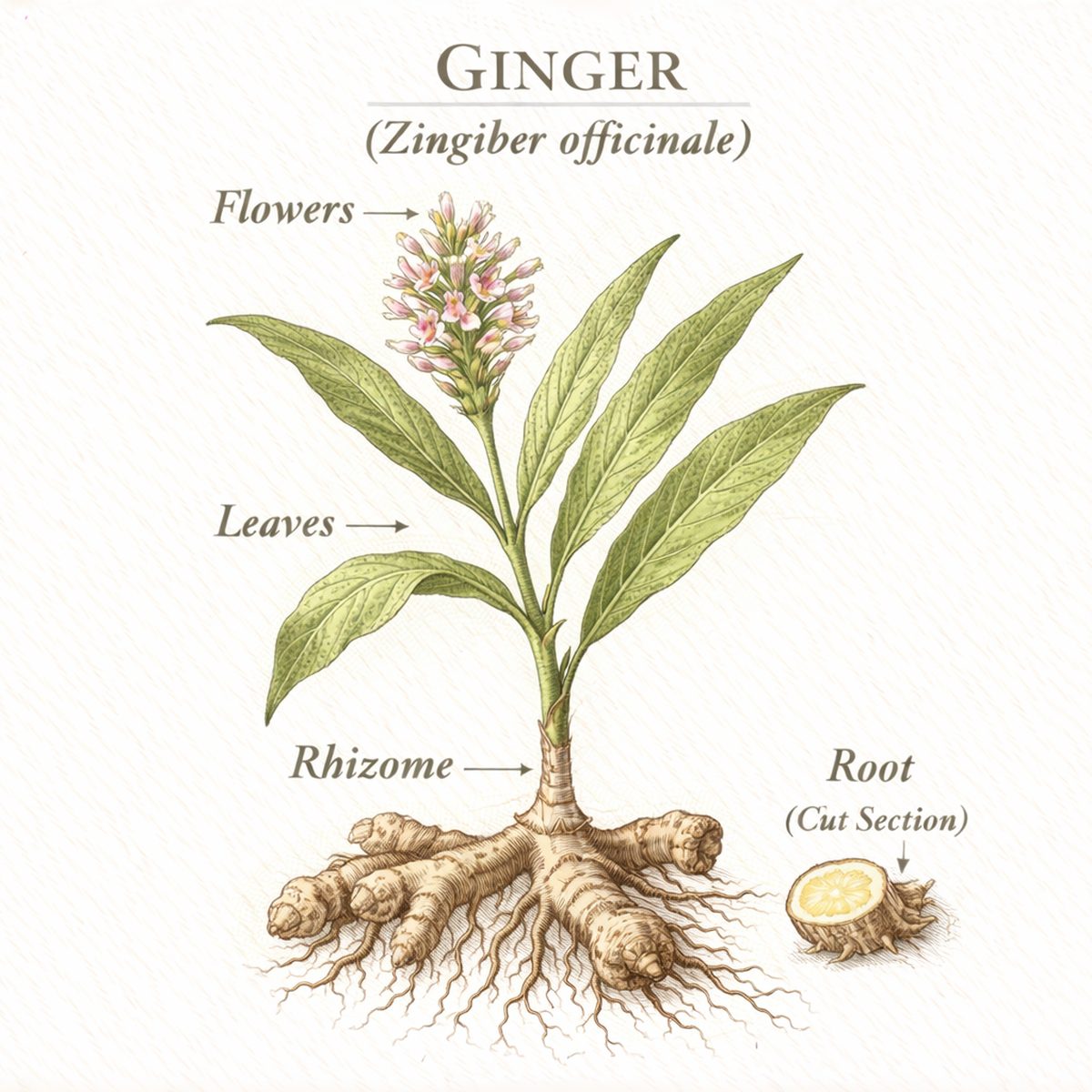
Botanical identity: Zingiber officinale. Plant part used: the rhizome. Preparation: fresh, dried, tea, capsules, or standardized extract. Traditional use: digestive support and nausea relief across multiple independent traditions.
Confidence Scale — nausea relief: Moderate-to-Strong. Clinical trial support for nausea and vomiting, including chemotherapy-related and pregnancy-related nausea, with research directly comparing ginger to vitamin B6 and finding comparable results in some studies.
Confidence Scale — anti-inflammatory and anticoagulant interaction: Different picture. Anti-inflammatory research (including reductions in markers like CRP) sits at a reasonable Moderate tier. But ginger's effect on platelet aggregation — what would drive an anticoagulant interaction — is genuinely equivocal, with inconsistent study design and dosing. That's Preliminary, not settled.
Dosage context reported in sources: roughly 500–1,500mg daily, divided, for nausea; 1–3g daily for anti-inflammatory use in some studies — typical research ranges, never a personal prescription.
Safety profile: anyone on blood-thinning medication should talk to a clinician before using ginger regularly, rather than assuming it's fine because it's a common food. Otherwise generally well-tolerated; belching is a reported mild side effect.
Quality/sourcing: wide availability generally means good access to tested products — check for a specified extract and dose to match research. Related Deep Dive: EP02, for the complete investigation.
Next: Turmeric.
This content is for educational purposes only and is not medical advice. Consult a qualified healthcare provider before using any herb, especially if pregnant, nursing, on medication, or managing a health condition.
Medical disclaimer: This content is for educational purposes only and is not medical advice. Consult a qualified healthcare provider before using any herb, especially if you are pregnant, nursing, giving herbs to a child, taking prescription medication, or managing a health condition.