Module 6 · Materia Medica · Lesson 35
Part of: Beginner Materia Medica: Twelve Herbs, Honestly Rated
Elderberry: A Complete Materia Medica Entry
1 min read · 289 words
Pure Herbal Wisdom — Herbalism 101, Lesson 35
Lesson 6 opened this course's plant-science module with this exact plant, as a preview. Now we close that loop for real: one preparation genuinely well-studied, one genuinely dangerous, same species.
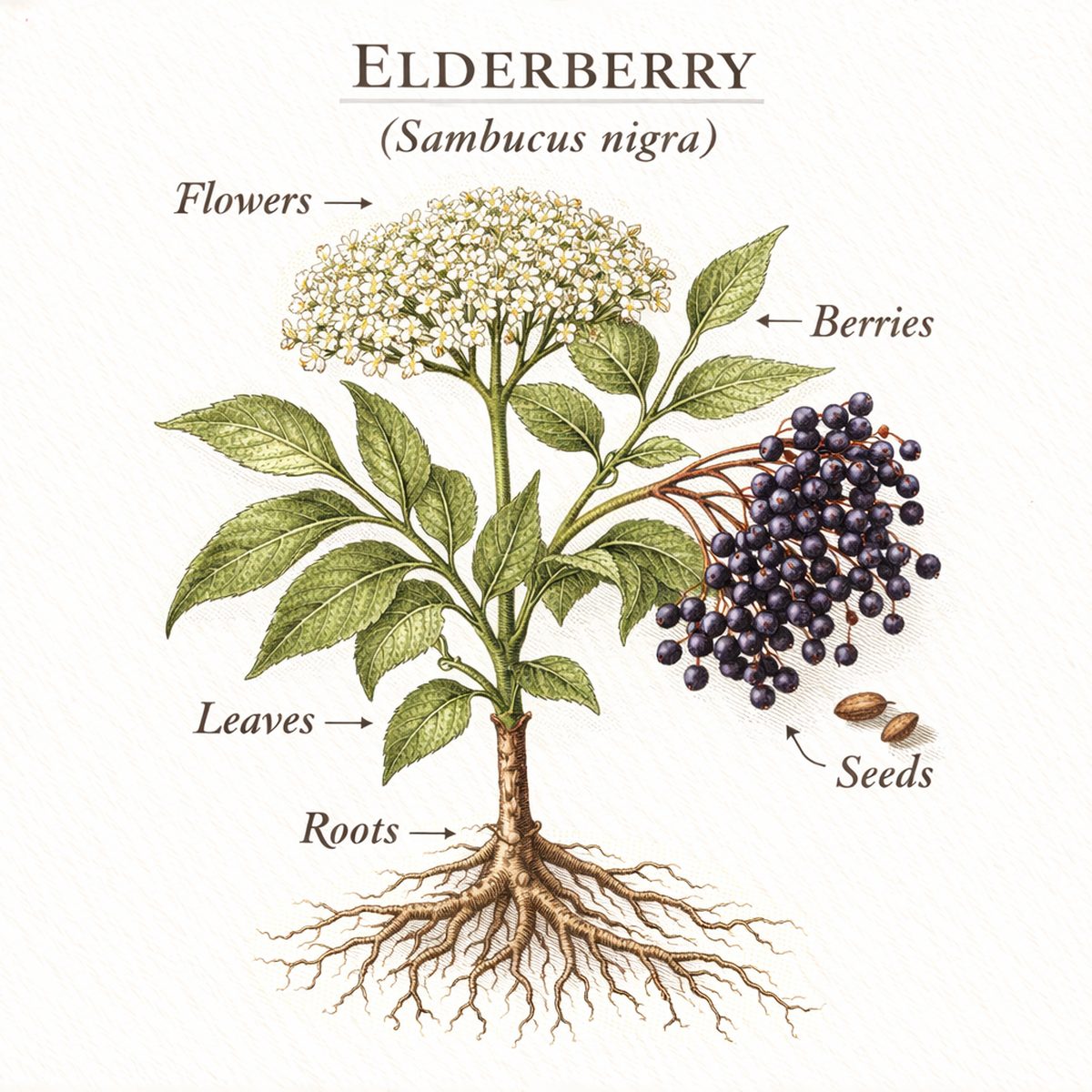
Botanical identity: Sambucus nigra. Plant part used: specifically the ripe berry, after cooking or standardized processing. Preparation: syrup is the classic format, plus standardized extracts and lozenges. Traditional use: cold and immune support across European folk tradition.
Confidence Scale — cold/flu symptom reduction: Moderate. Multiple clinical trials, including a randomized, placebo-controlled trial in air travelers, show real reductions in cold duration and symptom severity with standardized extract, supported by in vitro research on activity against influenza virus components.
The safety point, in full: raw, unripe elderberries — along with the plant's bark, root, and leaves — contain cyanogenic glycosides, notably sambunigrin, capable of releasing hydrogen cyanide in the body, causing nausea, vomiting, and dizziness. This is not a mild caution — it's a hard rule: never eat raw or unripe elderberries, and never use the bark, leaves, or root without expert guidance. Properly processed products — cooked, syruped, standardized extracts — are expected to have these compounds removed or neutralized through processing, a genuinely different, much lower-risk category.
Dosage context from clinical trials: roughly 600mg daily for prevention, up to 900mg daily during illness, tested for up to 10 days without significant side effects. Safety: confirm any product is a properly processed, ripe-berry form — not raw material.
Related Deep Dive: EP05, for the complete investigation.
Next: Ashwagandha.
This content is for educational purposes only and is not medical advice. Consult a qualified healthcare provider before using any herb, especially if pregnant, nursing, on medication, or managing a health condition.
Medical disclaimer: This content is for educational purposes only and is not medical advice. Consult a qualified healthcare provider before using any herb, especially if you are pregnant, nursing, giving herbs to a child, taking prescription medication, or managing a health condition.