Module 6 · Materia Medica · Lesson 43
Part of: Beginner Materia Medica: Twelve Herbs, Honestly Rated
Cinnamon: A Complete Materia Medica Entry (Module 6 Finale)
1 min read · 327 words
Pure Herbal Wisdom — Herbalism 101, Lesson 43
The cinnamon in most spice racks and the cinnamon considered the "true" species aren't just different in flavor. One contains roughly twenty times more of a compound with real liver-safety implications.
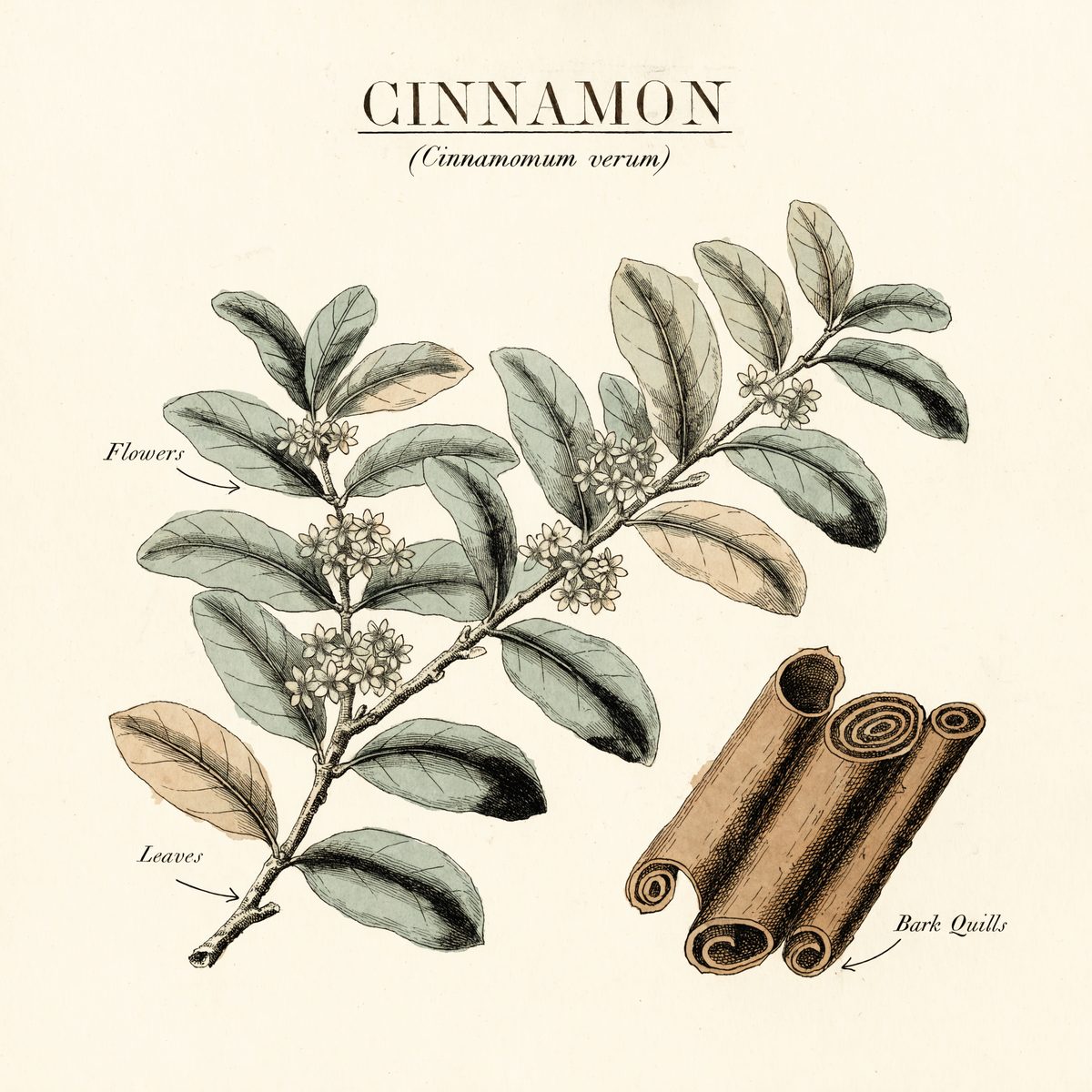
Botanical identity: Cinnamomum cassia — the common, less expensive cinnamon in most spice racks — and Cinnamomum verum, Ceylon cinnamon, often labeled "true cinnamon." Plant part used: bark, a direct callback to Lesson 7's bark-versus-leaf chemistry example. Preparation: ground bark spice, capsules, standardized extract. Traditional use: culinary and medicinal across numerous traditions, historically one of the most widely traded spices in the world.
Confidence Scale — blood sugar: Preliminary-Moderate. A dose-response meta-analysis found modest reductions in fasting glucose in type 2 diabetes, though results vary meaningfully by species, dose, and individual response.
The quantified safety point: cassia cinnamon contains roughly 2–5mg of coumarin per gram — far more than Ceylon. The European Food Safety Authority's tolerable daily intake for coumarin is 0.1mg per kilogram of body weight. Do the math, and just one to two teaspoons of cassia cinnamon daily can exceed that limit for many adults, while the same amount of Ceylon typically would not. Documented case reports link high cumulative cassia coumarin intake to real liver toxicity. For anyone taking cinnamon regularly at supplement-level doses, checking whether it's cassia or Ceylon is a genuine, quantifiable safety decision.
Dosage context: research doses generally range 1–6g daily depending on species and study. Safety: anyone with liver concerns should specifically favor Ceylon or a coumarin-controlled product; species labeling is the single most important check for this herb.
That closes Module 6 — twelve herbs, one consistent nine-field framework, and a genuine range of evidence strength and safety complexity. Module 7 starts next: becoming a responsible herbalist.
This content is for educational purposes only and is not medical advice. Consult a qualified healthcare provider before using any herb, especially if pregnant, nursing, on medication, or managing a health condition.
Medical disclaimer: This content is for educational purposes only and is not medical advice. Consult a qualified healthcare provider before using any herb, especially if you are pregnant, nursing, giving herbs to a child, taking prescription medication, or managing a health condition.